 Blog-Pulviso

1. Accelerated Thermal and Freeze-Thaw Stability
Liquid formulas must retain their structural viscosity, color balance, and fragrance profile under extreme environmental conditions. Stability testing protocols place production samples in thermal chambers at 40°C and 45°C for 12 weeks to simulate two years of ambient shelf life. Additionally, samples undergo 3 to 5 freeze-thaw cycles (shifting between -10°C and 40°C over 24-hour periods) to verify that freezing during international transport does not cause emulsion breakdown.

2. Centrifuge and Drawdown Dispersion Testing
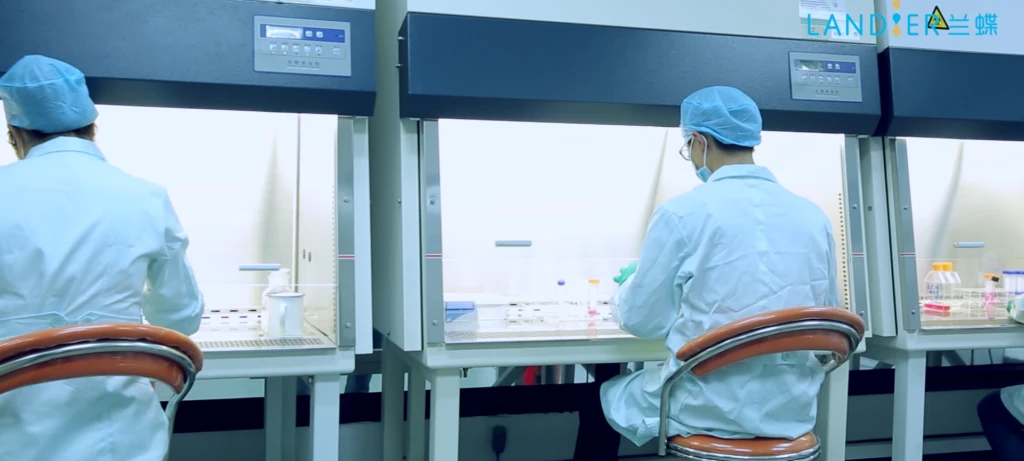
To verify pigment milling quality and suspension stability, laboratory technicians subject bulk samples to high-speed centrifuge testing (typically 3,000 RPM for 30 minutes). If pigment separation or clear oil layering occurs, the thixotropic gel network must be re-engineered. Formulators also perform "drawdown" tests—spreading a thin film of liquid bulk over a standardized test card using a doctor blade—to verify that iron oxides are uniformly dispersed without streaking or clumping.
3. Microbiological Control and Challenge Testing (PET)
Because water-containing emulsion creams and stains are susceptible to bacterial and fungal growth, Preservative Efficacy Testing (PET / Challenge Testing) is mandatory. The preservative blend must demonstrate complete neutralization of introduced pathogens over a 28-day cycle. Every completed production batch must be released with a batch-specific Certificate of Analysis (COA) and Safety Data Sheet (SDS) confirming compliance with microbial count limits.
4. Global Regulatory Compliance
Commercializing liquid blush in international markets requires compliance with regional cosmetics legislation:
- United States (FDA / MoCRA): Manufacturing facilities must maintain active FDA facility registration under MoCRA rules. Formulations must undergo safety substantiation, and all color additives (iron oxides, D&C lakes, mica) must comply with FDA color additive regulations for facial use.
- European Union & UK (Regulation EC No 1223/2009): Requires a Product Information File (PIF), a Cosmetic Product Safety Report (CPSR) authored by a certified toxicologist, CPNP portal notification, and an appointed European Responsible Person (RP).
- Factory Manufacturing Standards: Production must take place within ISO 22716 and GMPC certified facilities, ensuring air filtration, automated nozzle sanitation, and lot-number raw material batch traceability.
What formulation challenges cause liquid blush migration, leakage, and pigment settling?
To build a repeatable, profitable liquid blush line, brand managers must evaluate how different formulation bases interact with primary packaging, decide between stock private label formulas and custom OEM R&D based on target launch windows, and enforce s
Jangan direproduksi tanpa izin:Blog-Pulviso » How to Launch a Custom Liquid Blush Line: Emulsions, Packaging & OEM